
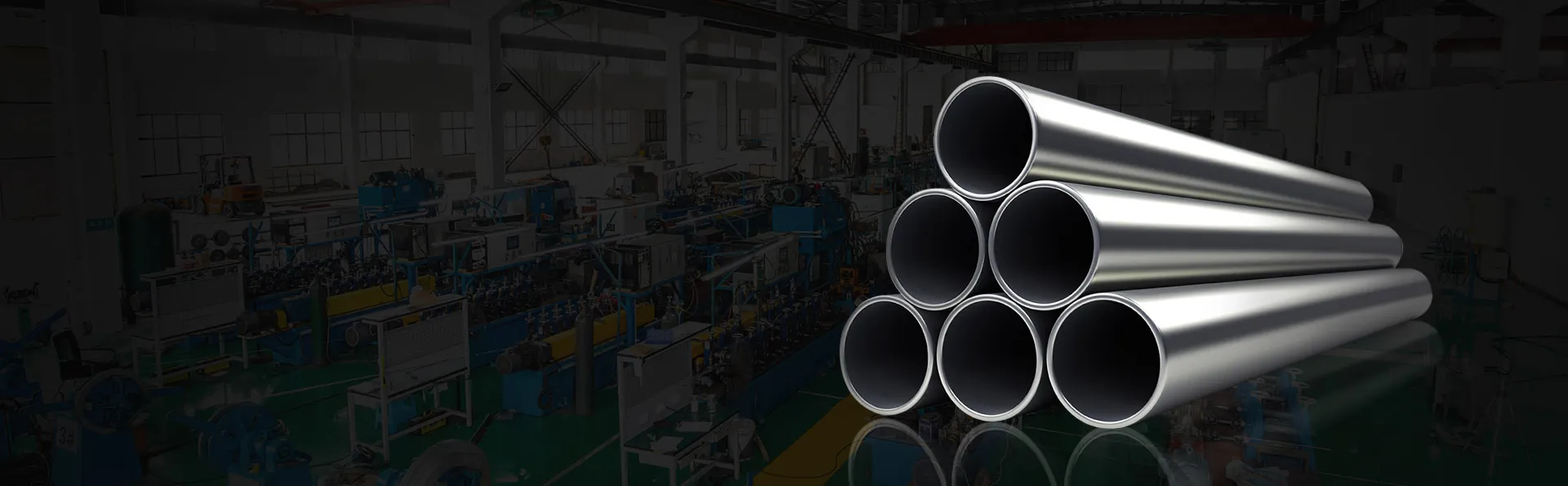
Stainless Steel Sanitary Tubing stands as the pinnacle of material science and precision engineering for industries where purity, cleanliness, and absolute hygiene are non-negotiable. Unlike standard industrial pipe designed for basic conveyance, sanitary tubing is engineered to a singular, critical standard: the prevention of contamination. Its entire purpose is to serve as an inert, ultra-smooth, and cleanable conduit for products in the food & beverage, pharmaceutical, biotech, and cosmetic sectors.
Foundation: The Right Alloy
The core material is premium stainless steel, most commonly meeting the ASTM A270 specification and made from AISI 304 or 316L. AISI 316L, a low-carbon variant, is the preferred choice for its superior corrosion resistance, particularly against chlorides and aggressive acids used in cleaning and sanitizing processes. The low carbon content prevents “sensitization” during welding—a phenomenon where chromium depletion at grain boundaries can create corrosion sites—ensuring the entire system, including weld zones, maintains its integrity and hygienic properties.
The Critical Surface: A Barrier Against Contamination
The defining feature is the internal product contact surface. It is polished to an extremely smooth, non-porous finish to prevent bacteria, microbes, or product particles from adhering and forming biofilms. This surface finish is rigorously measured in micro-inches (µin) or micrometers (µm) of roughness. Common grades include:
Mechanical Polish (#4): Suitable for many food and beverage applications.
Electropolished Finish: The gold standard for high-purity applications. This electrochemical process removes a thin surface layer, leveling microscopic peaks to create the smoothest possible surface. It further enhances cleanability and passivates the metal, boosting corrosion resistance.
Engineered Connections: A Seamless Flow Path
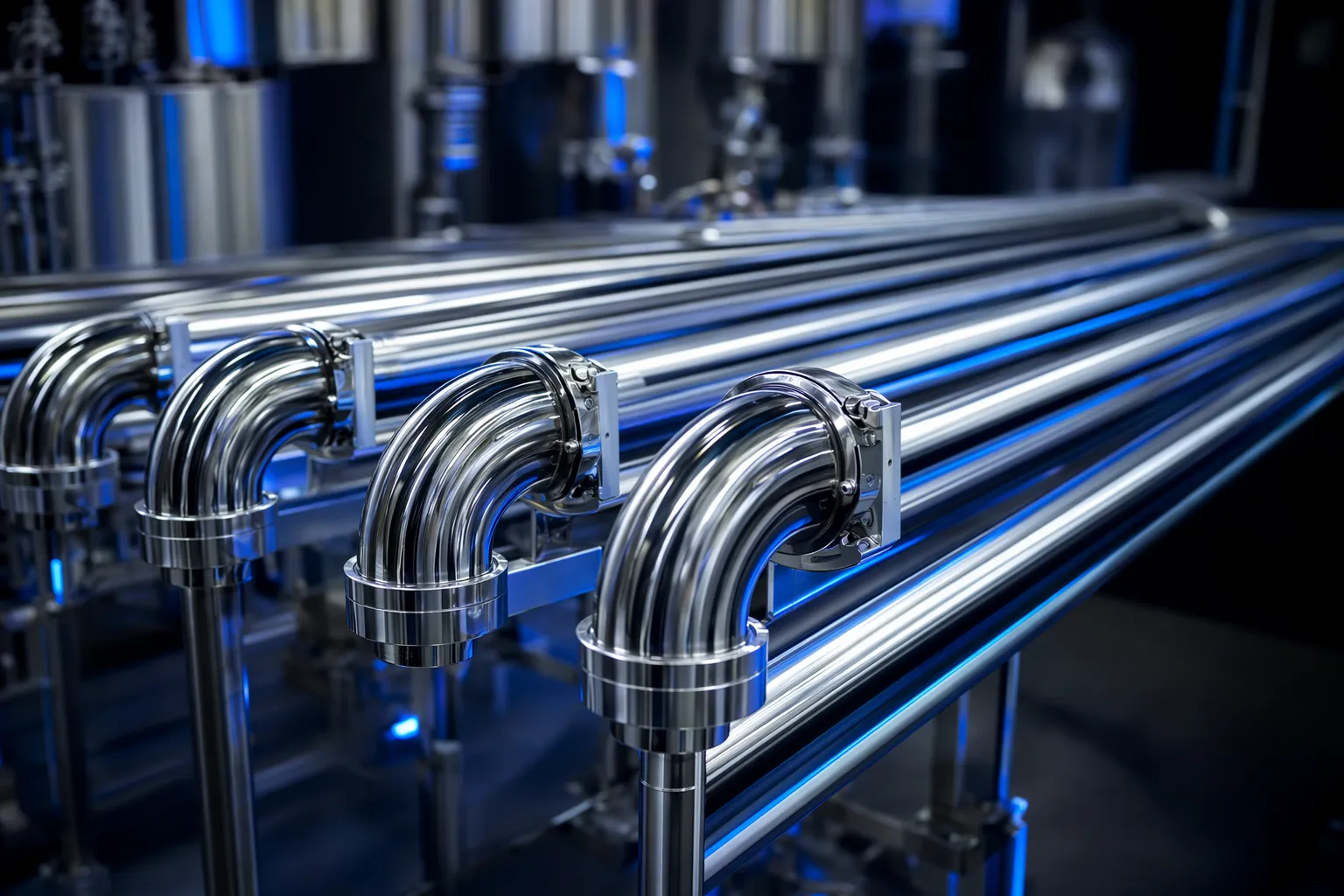
Connections are designed to be crevice-free, ensuring no pockets where material could become trapped. This is achieved through specialized fittings like:
Sanitary Clamp (Tri-Clamp): The most common system, using a ferrule, gasket, and clamp to create a smooth, aligned, and easily disassembled connection.
Butt Weld Connections: When permanently joined, these welds are performed to sanitary standards (often via automated orbital welding), then ground and polished flush internally to maintain a continuous surface.
The Result: The Backbone of Hygienic Processing
In essence, stainless steel sanitary tubing forms the reliable core of Clean-in-Place (CIP) and Sterilize-in-Place (SIP) systems. It ensures product purity, supports compliance with strict FDA and USDA regulations, and safeguards public health by providing a closed, cleanable, and contaminant-resistant pathway for sensitive products from processing to transport.
Built for industries where contamination is not an option
Mirror-Polished Interior
Internal surface roughness Ra O.2um (max0.8um), achieving a mirror-like finish thatprevents bacterial adhesion and ensureseasy CIP/SIP cleaning
Premium Steel Alloys
Manufactured from certified AlSI 304 and316L stainless steel with low carbon content,providing superior corrosion resistance and mechanical strength.
Precision Welding
Automated orbital TIG welding with full penetration ensures uniform, defect-free welds. Every joint is inspected with endoscopic bore cameras
Tight Dimensional Tolerance
OD tolerance of +0.05mm and wall thickness consistency within +5%, ensuringperfect compatibility with all standard sanitary fittings and ferrules.
Full Traceability
Every tube is laser-marked with heat number, grade, size, and manufacturing date.Complete material certifications (EN 10204 3.1) provided with every shipment
Global Logistics
Plastic end-caps sealed, PE bag wrapped,and packed in seaworthy wooden cases. Wedeliver to 50+ countries with reliable lead times.
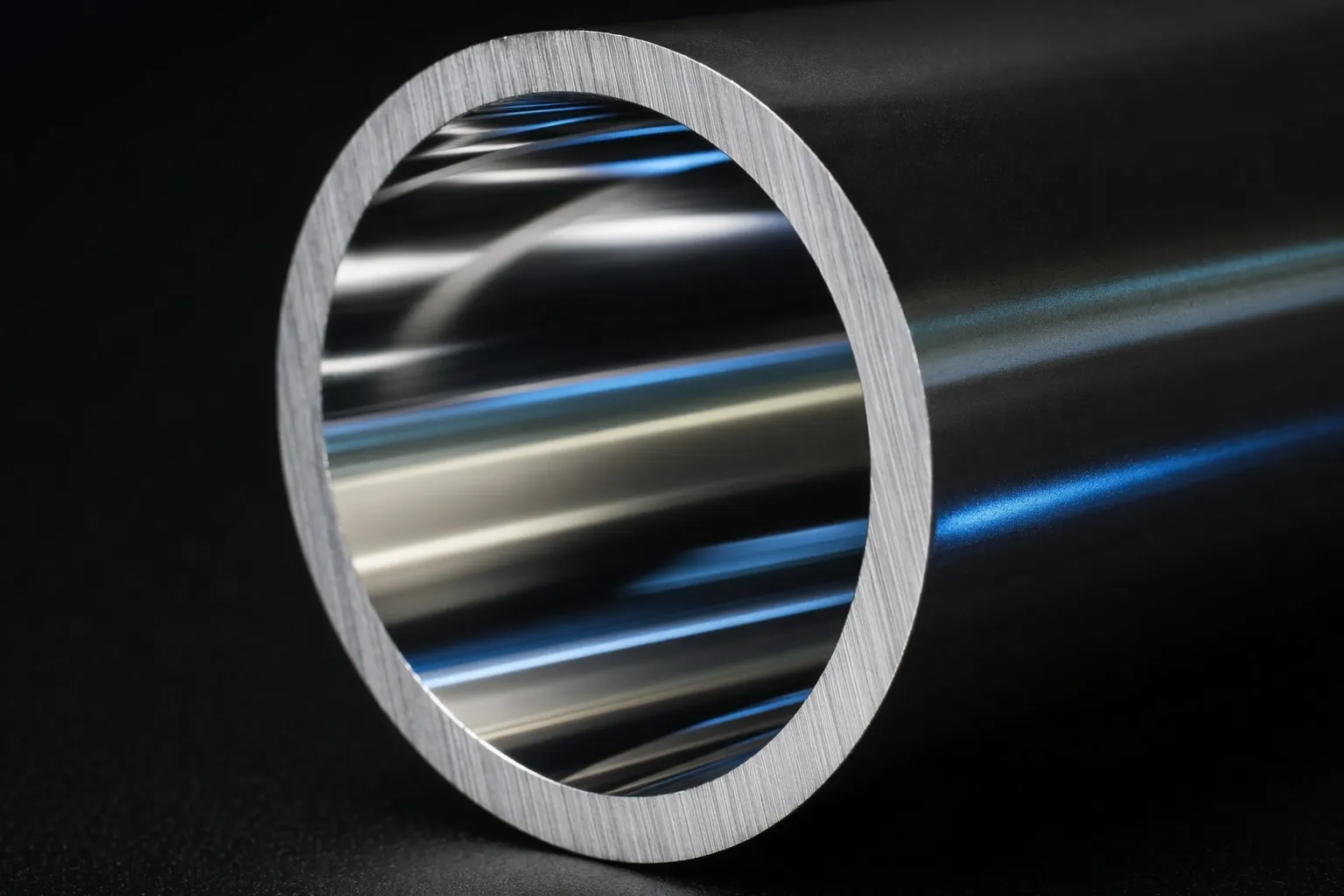
Surface finish that redefines purity
Our mechanical polishing and electropolishing processes produce an ultra-smooth internal surface virtually free of micro-defects – eliminating sites where bacteria can harbour and ensuring complete drainability after each CIP cycle.
INTERNAL RA
≤0.25 μm
EXTERNAL RA
≤0.8 μm
PASSIVATION
Citric/HNO3
INSPECTION
Endoscopic
Purpose -built for critical hygiene environments
Food & Beverage Processing
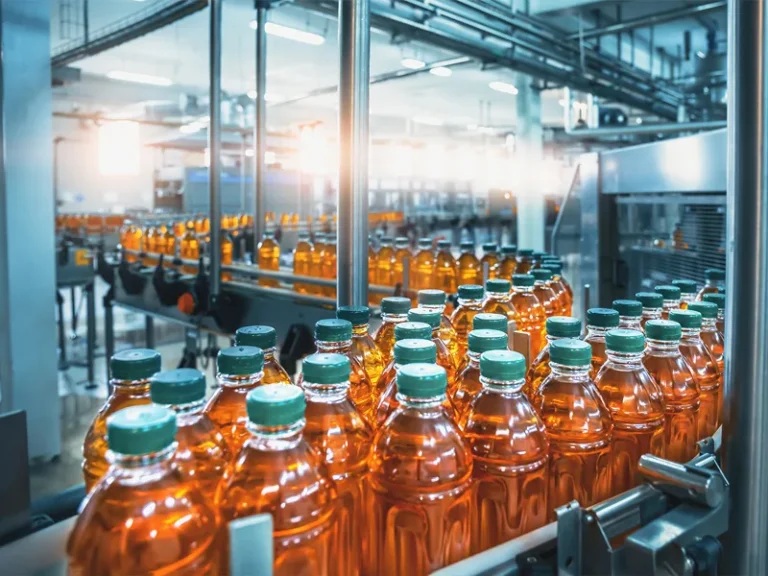
Dairy, brewing, juice, and edible oil production lines. Our tubes meet FDAand EU food-contact regulations, ensuring product safety from tank tofiller.
Pharmaceutical & Biotech
WFl, pure steam, and process lines for GMP facilities. Electropolished to Ra 0.25pm with full documentation for validation protocols.
Cosmetics & Personal Care
Hygienic piping for creams, lotions, and liquid formulations. Smooth boreprevents product buildup and ensures complete batch recovery.
Chemical & Fine Chemical
316L tubes with enhanced Mo content for aggressive media. Resistant tochlorides, organic acids, and high-temperature process fluids.
Specifications that speak for themselves
Our sanitary tubes are manufactured in strict accordance with international standards. Every parameter is controlled and verified.
- Material
- Outer Diameter
- Wall Thickness
- Length
- Internal Ra
- External Ra
- End Connections
- Surface Treatment
- Max Working Pressure
- Temperature Range
- Certification
- AISI 304/304L/316L
- 12.7 mm - 323.8 mm (1/2"-12")
- 0.5 mm - 6.0 mm (BWG16-4)
- Up to 6,000 mm (custom on request)
- ≤ 0.4 μm (Ra ≤ 0.25 μm optional)
- ≤ 0.8 μm
- Weld / Clamp / Threaded
- Mechanical polish/Electropolish
- Up to 40 bar
- -40°C to +200°C
- EN10204 3.1/FDA/3-A