
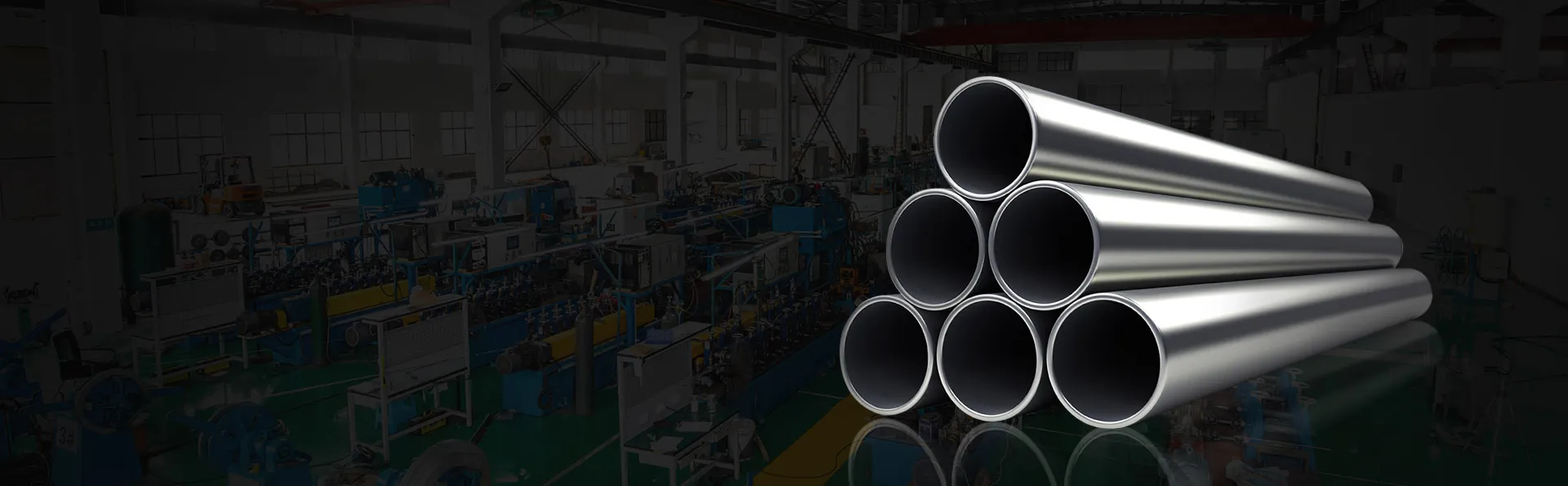
Stainless Steel Liquid Cooling Systems
Stainless steel tube and pipe options for data center liquid cooling loops, CDU manifolds, and related thermal-management piping. Select the grade, dimensions, joining method, test requirements, and documentation for the specific system design.
316L
Low-Carbon Stainless Steel
Project-Specific
Design and Testing Criteria
Inspection
Leak Testing Available
Engineered for Zero Compromise
Components can be produced to project specifications with agreed material documentation, welding procedures, dimensional checks, and pressure or leak testing.
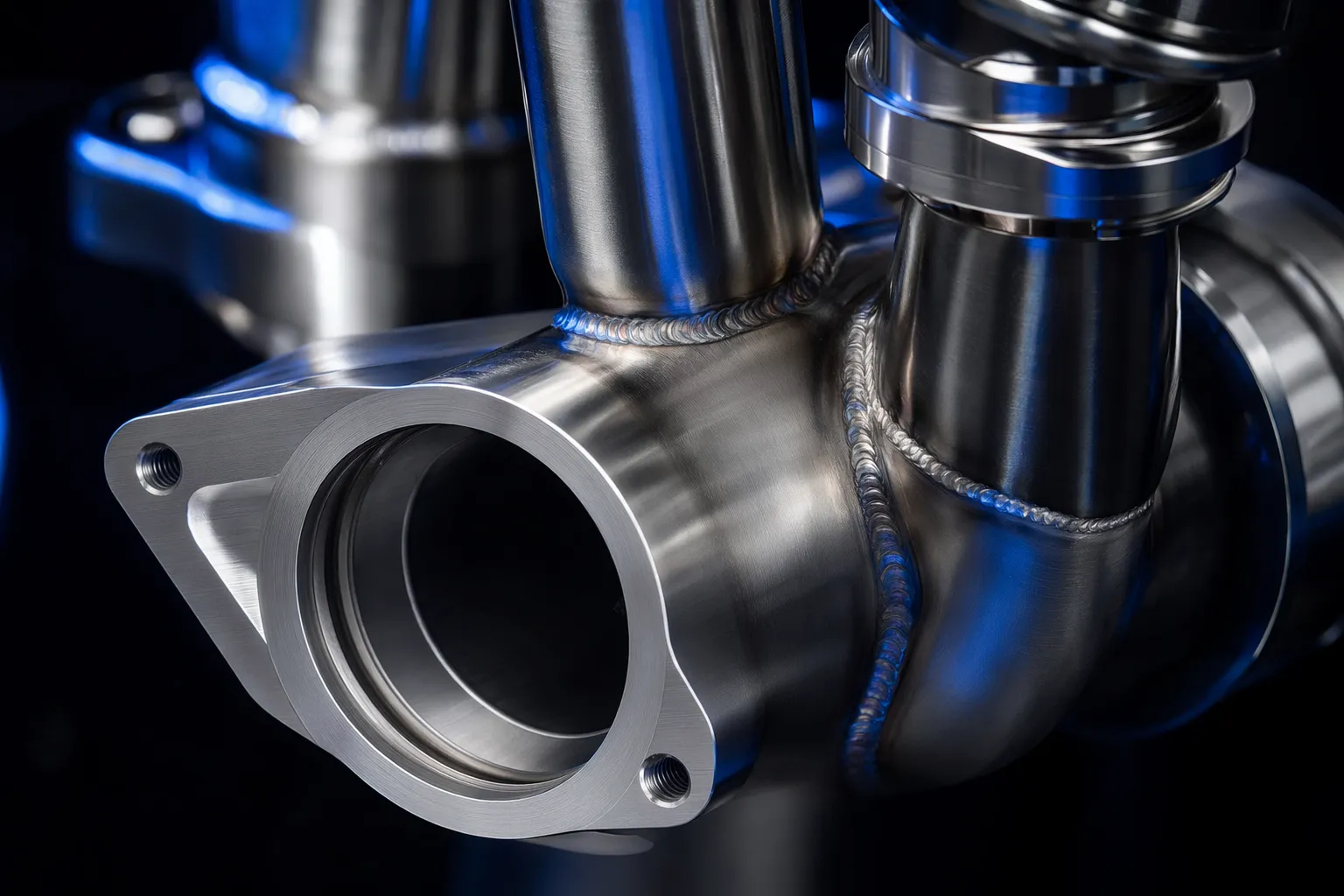
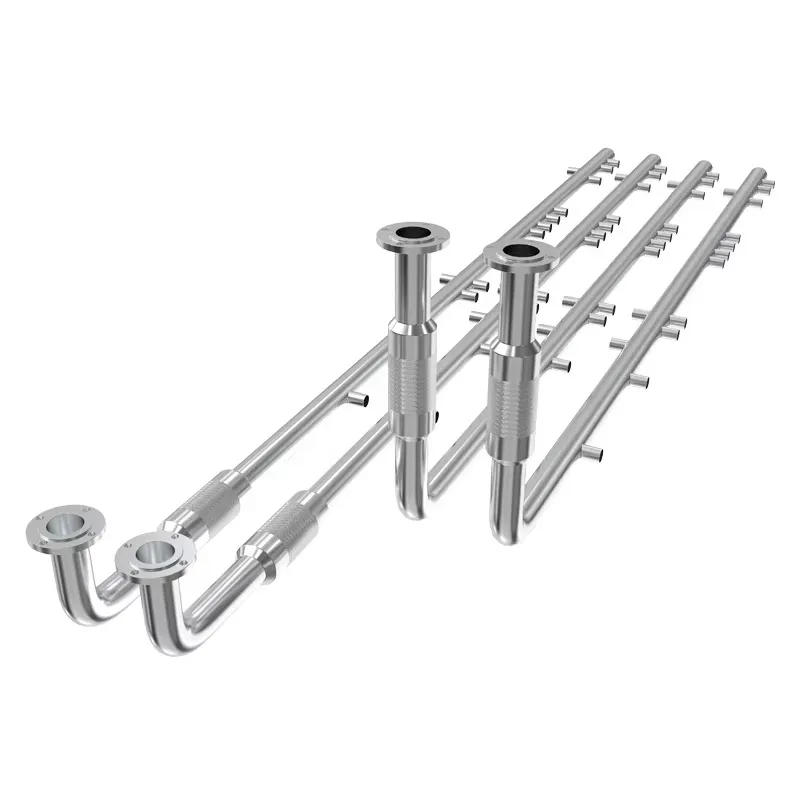
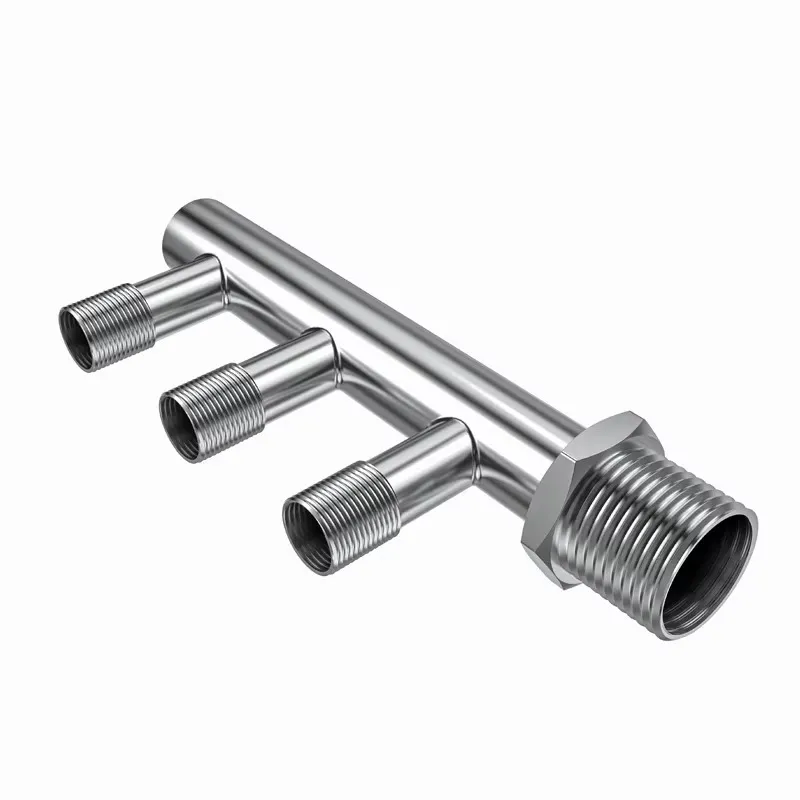
Coolant Distribution Manifolds
CNC-machined 316L stainless steel manifolds with orbital-welded branch connections. Available in custom port configurations with integrated isolation valves and flow balancing.
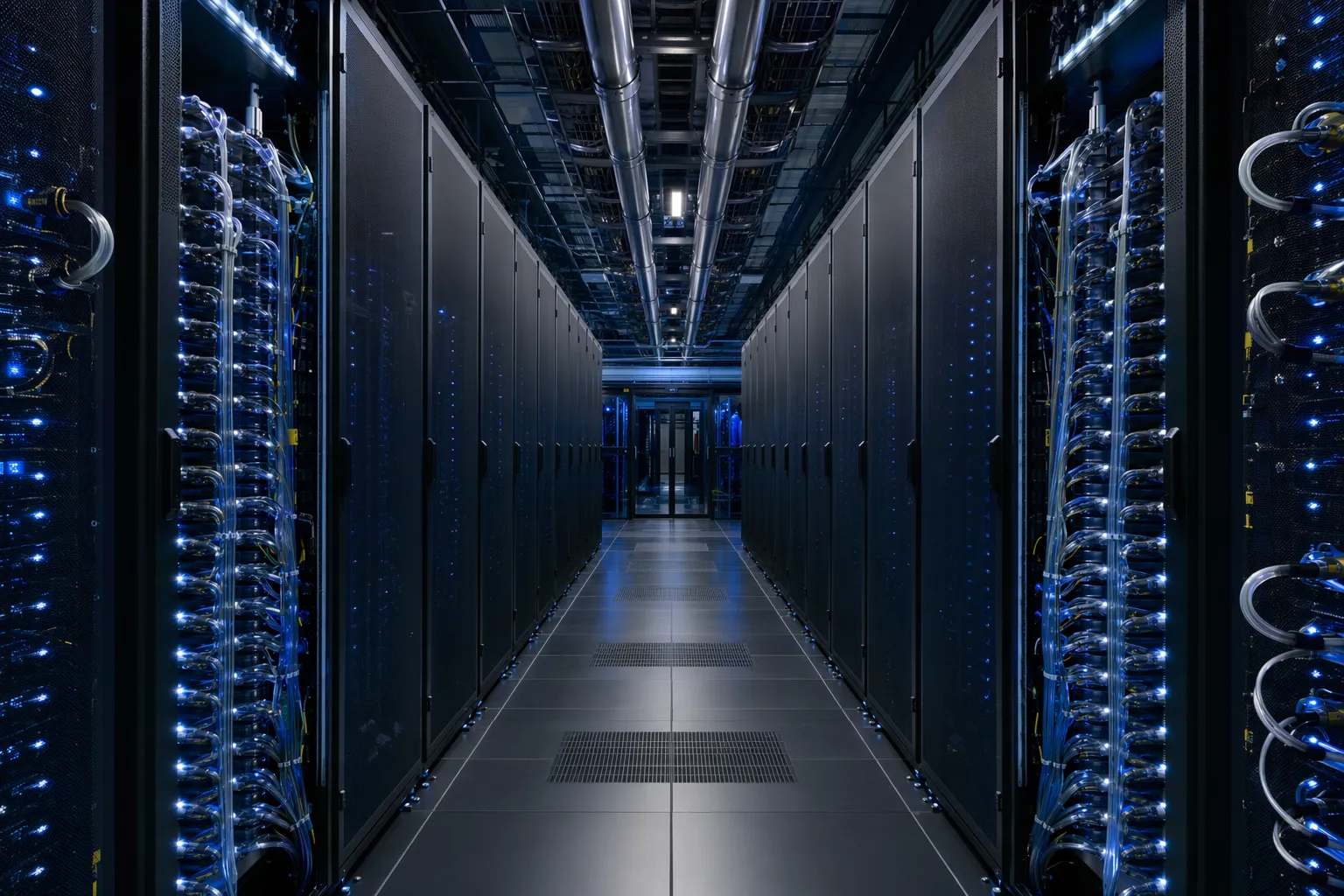
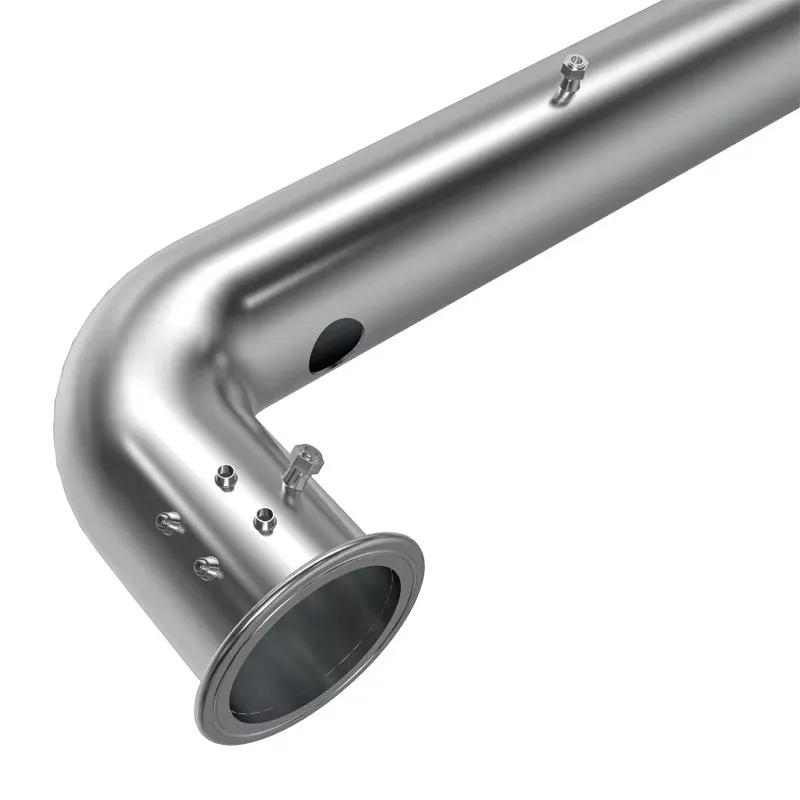
Primary Piping Assemblies
Pre-fabricated pipe spools with automated orbital welds, engineered for direct-to-rack and secondary loop deployments. Pressure tested to 1.5x operating pressure with helium leak detection.
Built to Exacting Standards
Every system undergoes rigorous quality control from raw material certification through final hydrostatic testing.
316L
Alloy
By Specification
Working Pressure
Ra 0.4
mm Surface
<10⁻⁹
mbar·l/s
Parameter
- Material Grade
- Size Range
- Wall Thickness
- Weld Procedure
- Surface Treatment
- Pressure Test
- Leak Testing
- Cleanliness
- Design Life
Specification
- ASTM A249 / ASTM A269
- TP304 / 304L / 316 / 316L
- Outside diameter: 1/4 in. to 12 in.
- Wall thickness: 0.035 in. to 0.120 in.
- Welded or seamless construction
- Surface finish according to project requirements
- Hydrostatic or leak testing by agreed inspection plan
Standard
- ASTM
- ASME B36.19M
- ASME B36.19M
- ASME BPVC Section IX
- ASTM A967
- ASME B31.3
- ASTM E499
- SEMI F57
- —
Purpose-Built for Critical Infrastructure
From hyperscale cloud facilities to exascale research installations, our systems are engineered to meet the most demanding thermal performance and reliability requirements.
Hyperscale Data Centers
Direct-to-chip and rear-door heat exchanger cooling distribution for high-density AI/ML training clusters and general-purpose compute.
- High-density rack cooling loops
- Primary and secondary distribution piping
- CDU and manifold connections
- Project-specific tube routing
Supercomputing & HPC
Ultra-pure water and mixed glycol systems for exascale and national laboratory installations requiring maximum thermal performance.
- Facility cooling distribution
- Water and glycol coolant loops
- Support coordination according to system design
- Material traceability when specified
Why Mission-Critical Operators Trust Us
Quality-Controlled Welds
Welded assemblies can be inspected using hydrostatic, leak, and other agreed testing methods according to project requirements.
Inspection Documentation
Material and inspection documentation is supplied according to the agreed purchase specification.
Technical Coordination
Our team supports specification review, production planning, and inspection documentation for international projects.
Scalable Manufacturing Support
Support for prototype quantities and scheduled production orders. Manufacturing scope and inspection plans are confirmed during quotation.
Engineering Review
Tube routing, connection details, fabrication requirements, and inspection criteria can be reviewed before production.
Production Planning
Lead times depend on dimensions, quantity, fabrication scope, testing, and documentation. Confirm the production schedule during quotation.
Stainless Steel Tubing For Data Center Cooling
Stainless steel is becoming an increasingly popular material for specific cooling components within modern data centers, particularly as sustainability, longevity, and thermal efficiency become more critical.
- International Standard
-
Material Grades
- Outer Diameter
- Wall Thickness
- Tube Type
- MTC
- Certificate
- ASTM A249/ASME SA249, ASTM A269 (Welded),
- TP304/304L, TP316/316L, TP309/309S, TP310/310S, TP321/321H, TP347/347H,
- 1/4″ - 12" , 6.35mm - 304.8mm
- 0.035″ - 0.12″ , 0.89mm - 3.05mm
- Seamless or Welded
- EN10204 3.1
- ISO 9001:2015 , PED 2014/68/EU , AD 2000-WO
Stainless steel pipe and tubing for data center liquid cooling systems is used to move coolant between cold plates, coolant distribution units (CDUs), manifolds, and facility water loops. The required tube or pipe depends on the system pressure, coolant chemistry, connection method, cleanliness level, and installation layout.
304 or 316L stainless steel may be considered where corrosion resistance, clean internal surfaces, dimensional control, and reliable joining are important. Material compatibility must be evaluated for the complete loop, including fittings, valves, seals, and any dissimilar metals.
For a technical review or quotation, specify the material grade, outside diameter or nominal pipe size, wall thickness, welded or seamless construction, surface condition, connection type, operating pressure and temperature, test requirements, quantity, and delivery destination. Related products include ASTM A312 stainless steel pipe and ASTM A269 stainless steel tube.

Specification
| DN | Tube OD | Wall Thickness | OD Tolerance | WT Tolerance | Length Tolerance | Weight |
|---|---|---|---|---|---|---|
| inch(mm) | inch(mm) | inch(mm) | inch(mm) | (kg/m) | ||
| 8 | 1/4" (6.35) | 0.035" (0.89) | +/-0.005" (0.13) | +/-10.0% | +1/8" (3.18) -0 | 0.124 |
| 15 | 1/2" (12.7) | 0.065" (1.65) / 0.049"(1.25) | +/-0.005" (0.13) | +/-10.0% | +1/8" (3.18) -0 | 0.454 |
| 20 | 3/4" (19.1) | 0.065" (1.65) / 0.049"(1.25) | +/-0.005" (0.13) | +/-10.0% | +1/8" (3.18) -0 | 0.717 |
| 25 | 1" (25.4) | 0.065" (1.65) / 0.049"(1.25) | +/-0.005" (0.13) | +/-10.0% | +1/8" (3.18) -0 | 0.976 |
| 40 | 1-1/2" (38.1) | 0.065" (1.65) / 0.049"(1.25) | +/-0.008" (0.20) | +/-10.0% | +1/8" (3.18) -0 | 1.50 |
| 50 | 2" (50.8) | 0.065" (1.65) / 0.049"(1.25) | +/-0.008" (0.20) | +/-10.0% | +1/8" (3.18) -0 | 2.02 |
| 65 | 2-1/2" (63.5) | 0.065" (1.65) | +/-0.010" (0.25) | +/-10.0% | +1/8" (3.18) -0 | 2.54 |
| 80 | 3" (76.2) | 0.065" (1.65) | +/-0.010" (0.25) | +/-10.0% | +1/8" (3.18) -0 | 3.06 |
| 100 | 4" (101.6) | 0.083" (2.11) | +/-0.015" (0.38) | +/-10.0% | +1/8" (3.18) -0 | 5.23 |
| 150 | 6" (152.4) | 0.109" (2.77) | +/-0.030" (0.76) | +/-10.0% | +1/8" (3.18) -0 | 10.32 |
| 200 | 8" (203.2) | 0.109" (2.77) | +/-0.030" (0.76) | +/-10.0% | +1/8" (3.18) -0 | 13.86 |
| 250 | 10"(254) | 0.120"(3.05) | +/-0.040" (1.016) | +/-10.0% | +1/8" (3.18) -0 | - |
| 300 | 12"(304.8) | 0.120"(3.05) | +/-0.040" (1.016) | +/-10.0% | +1/8" (3.18) -0 | - |
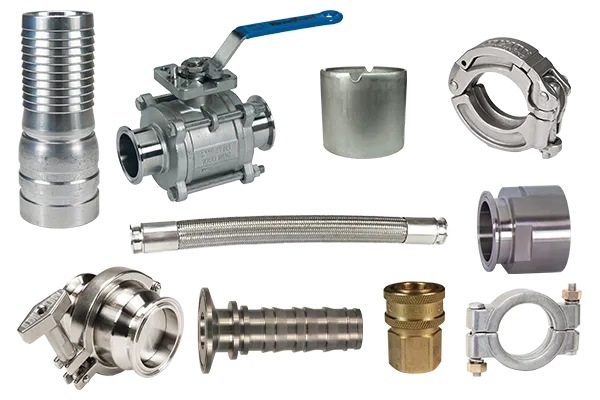
Liquid Cooling Systems Components
Tubing: Corrosion-resistant and hygienic stainless steel tubing for carrying and distributing coolant. While 316 stainless steel is often preferred, 304 is occasionally considered given its lower cost. Most Coolant Distribution Unit (CDU) and manifold designs require custom fabrication of tubing to minimize space within the cramped quarters of a CDU, server rack, or data center in general.
Fittings and Connectors: Similar to tubing, stainless steel fittings and connectors ensure leak-proof connections between components along with the ability to withstand high-pressure and high-temperature applications.
Control Valves: Stainless steel valves are used for controlling the flow of coolant within the system.
Filters and Strainers: Stainless steel strainers and filters are often incorporated to remove contaminants and maintain performance of the cooling system.
Pumps: Stainless steel pumps are used to circulate the coolant throughout the system.
Why Stainless Steel in Data Center Cooling?
Data centers require reliable, efficient, and often water-based cooling systems. Traditional materials like carbon steel (with coatings) or copper have limitations that stainless steel addresses.
| Concern with Traditional Materials | How Stainless Steel Solves It |
| Corrosion: Water (even treated) and humidity cause rust in carbon steel pipes and tanks, leading to leaks, failures, and contamination. | Superior Corrosion Resistance: Stainless steel (especially grades 304 and 316) is highly resistant to rust and corrosion from water, chemicals, and atmospheric exposure, ensuring system integrity. |
| Contamination: Rust flakes and scale can clog sensitive cooling components like server cold plates and heat exchangers. | Hygienic & Clean: It provides a non-porous, smooth surface that prevents scaling and bacterial growth (like Legionella), keeping the cooling loop clean and efficient. |
| Longevity & Lifecycle Cost: Coated carbon steel systems may require frequent maintenance, re-coating, or early replacement. | Long Service Life: Stainless steel systems can last the entire lifespan of the data center (20+ years) with minimal maintenance, offering a lower Total Cost of Ownership (TCO). |
| Strength & Durability: It is a robust material that can withstand high pressures and physical impact during installation and operation. | High Strength-to-Weight Ratio: It allows for potentially thinner pipe walls while maintaining pressure ratings, and is resistant to damage. |
Key Applications of Stainless Steel in Data Center Cooling
Stainless steel is used in both the primary cooling infrastructure and advanced liquid cooling technologies.
Primary Water Loops & Piping
This is the most common application.
Chilled Water Pipes: The main distribution pipes carrying chilled water from the chillers to the Computer Room Air Handlers (CRAHs) or other cooling units.
Condenser Water Loops: Pipes that transport water to cooling towers to reject heat from the data center.
Pumps, Valves, and Tanks: Stainless steel is used for pump housings, valve bodies, and expansion tanks within these water loops for compatibility and durability.
Liquid Cooling Systems (The High-Growth Area)
As server densities skyrocket with AI and HPC, air cooling becomes insufficient. Direct liquid cooling is the future, and stainless steel is a key enabler.
Coolant Distribution Units (CDUs): The heart of a liquid-cooled system. CDUs often feature stainless steel plates, manifolds, and internal piping to handle the primary coolant loop.
Manifolds and Quick-Disconnects: These are the “plumbing” that connects the CDU to server racks and individual cold plates. Stainless steel ensures leak-free, reliable, and durable connections that can be serviced without failure.
Cold Plates: While the micro-channels are often copper for thermal performance, the housing and inlet/outlet ports of cold plates mounted directly on CPUs/GPUs are frequently made of stainless steel for corrosion resistance and structural integrity.
Adiabatic and Evaporative Cooling Systems
Many modern data centers use outside air and evaporation to save energy.
Cooling Tower Fill and Structure: Stainless steel is used in the wet sections of cooling towers and adiabatic coolers where constant exposure to water and air would rapidly corrode other metals.
Mist/Eliminator Plates: Components that manage water droplets in the airstream are often stainless steel to prevent corrosion and shedding of particles.
Backup Cooling Systems
On-Site Water Storage Tanks: Tanks storing water for emergency cooling or fire suppression are increasingly made from stainless steel to ensure water quality and tank longevity.
Benefits Summary: Why Choose Stainless Steel?
Unmatched Reliability: The biggest driver. Reduced risk of leaks and unplanned downtime.
Reduced Maintenance: No need for internal linings, cathodic protection, or frequent descaling. This lowers operational expenditure (OpEx).
High Purity & Cleanliness: Essential for protecting sensitive and expensive IT equipment in advanced liquid cooling loops.
Sustainability: Stainless steel is 100% recyclable at the end of its long life. Its durability aligns with green building certifications like LEED.
Long-Term Cost-Effectiveness: While the initial Capital Expenditure (CapEx) can be 20-40% higher than coated carbon steel, the Total Cost of Ownership (TCO) is often lower due to minimal maintenance and a much longer lifespan.
Considerations and Challenges
Higher Upfront Cost: The initial material and fabrication cost is significantly higher than carbon steel.
Fabrication Expertise: Welding and installing stainless steel requires specialized skills to prevent issues like “sugaring” (oxidation of the weld) which can compromise corrosion resistance.
Galvanic Corrosion: If stainless steel is connected to a less noble metal like carbon steel or aluminum in the presence of an electrolyte (water), it can accelerate corrosion of the other metal. Proper dielectric insulation is required.
Weight: Stainless steel is heavier than alternatives like CPVC, which can impact structural support requirements.