
- International Standard
- Material Grades
- Outer Diameter
- Wall Thickness
- Surface
- Tube Type
- Mill Test Certificate(MTC)
- Certificate
- ASTM A270, EN10357, DIN11850, AS1528.1, ISO2037, 3-A Standards
- AISI 304/304L/316/316L
- 1/4″ - 12"
- 0.035″ - 0.12″
- Grit 180, 240, 320
- Welded , Seamless
- EN10204 3.1
- ISO 9001:2015 , PED 2014/68/EU , AD 2000-WO
- 6.35mm - 304.8mm
- 0.89mm - 3.05mm
- ≤20Ra (0.5 μm) ID ≤30Ra (0.8 μm) OD
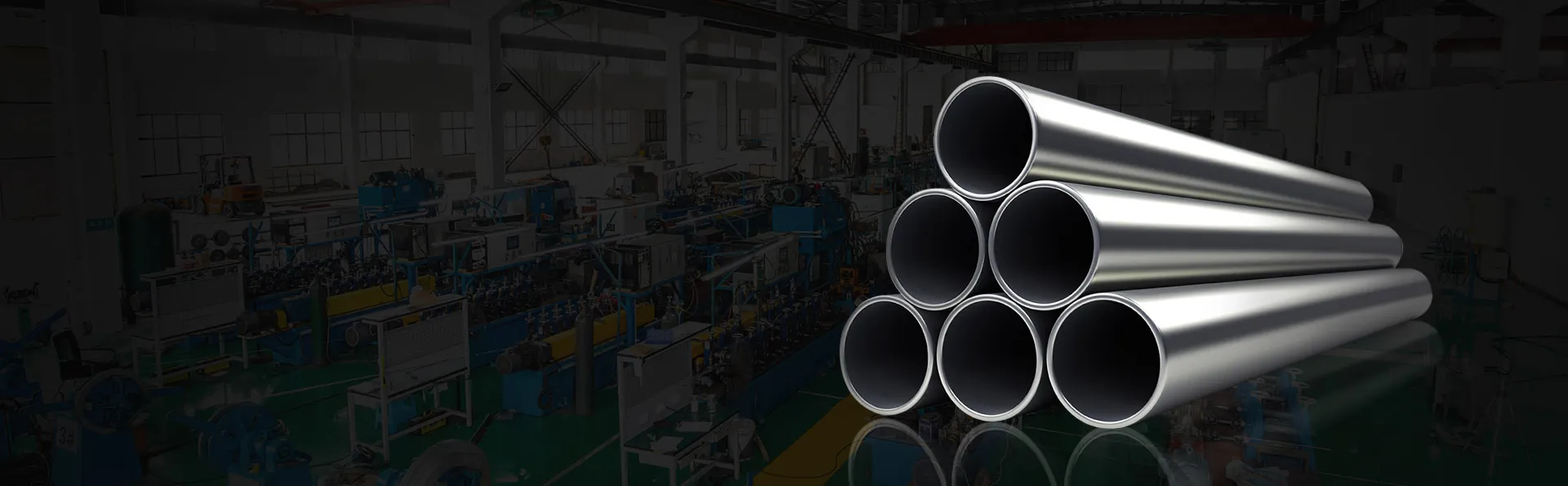
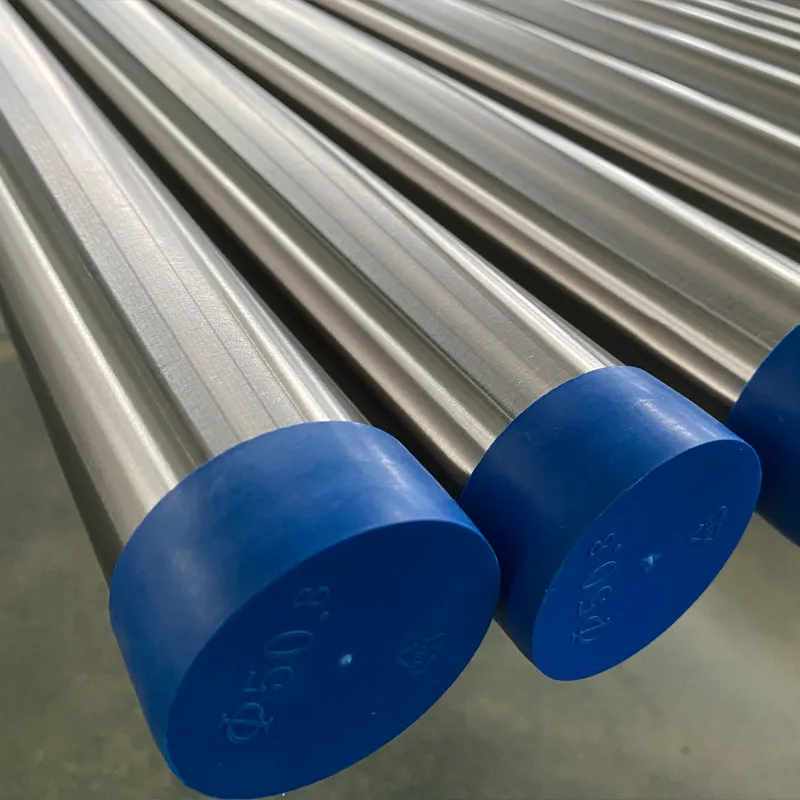
Stainless Steel Hygienic Tube
- International Standard
- Material Grades
- Outer Diameter
- Wall Thickness
- Surface
- Tube Type
- Certificate
- ASTM A270 / ASME SA270 , 3-A Sanitary Standard
- AISI TP304/304L/316/316L
- 1/4″ - 12" 6.35mm - 304.8mm
- 0.035″ - 0.12″ 0.89mm - 3.05mm
-
Grit 180, 240, 320
≤20Ra (0.5 μm) ID ≤30Ra (0.8 μm) OD - Welded , Seamless
- ISO 9001:2015 , PED 2014/68/EU , AD 2000-WO
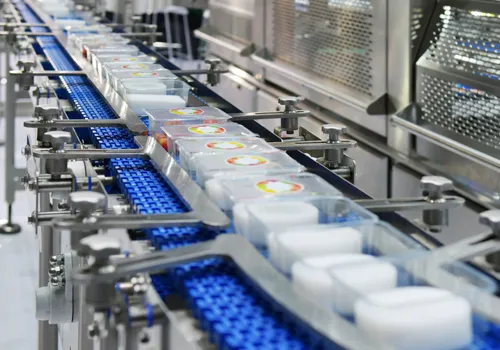
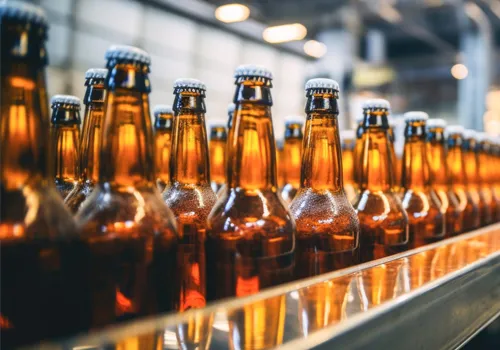
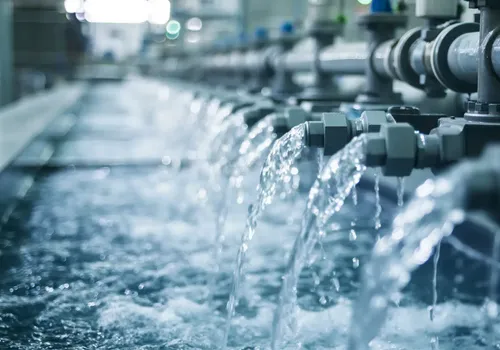
Stainless steel hygienic tube represents the highest standard of tubing for industries where purity, cleanability, and sterility are non-negotiable. While “food grade” and “sanitary” tubing are foundational, the term “hygienic” elevates the concept further, emphasizing a design philosophy that eliminates any potential for product retention or microbial harborage within the system itself. This is paramount not only in advanced food and beverage processing but absolutely critical in pharmaceutical, biotechnology, and cosmetic manufacturing.
Beyond the tube itself, the concept of “hygienic” fully encompasses the method of connection. The goal is a perfectly smooth, crevice-free, continuous flow path from one component to the next. This is achieved through orbital welding, where the tube is welded directly to a fitting or another tube under inert gas purge. The resulting weld bead is fully penetrated, smooth, and continuous, matching the internal surface finish of the tube. This eliminates the gaps, threads, and dead spaces inherent in mechanical connections like clamps, which can trap media and breed contamination. The entire system is designed for clean-in-place (CIP) and sterilize-in-place (SIP) protocols, ensuring the internal environment can be reliably and repeatedly returned to a sterile state. Therefore, stainless steel hygienic tube is not merely a component but the essential artery of an integrated, validated, and contamination-controlled processing system.
Dimension of ASTM A270 Hygienic Tube
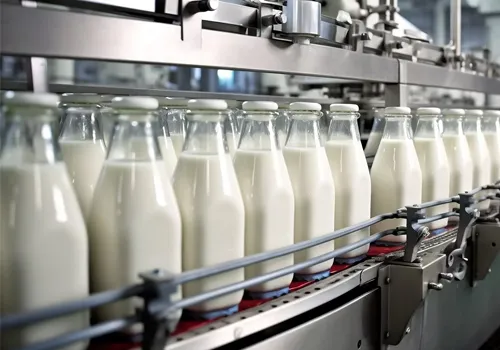
ASTM A270 is a standard specification for seamless and welded austenitic and ferritic/austenitic stainless steel food grade tubing. This standard covers stainless steel tubing used primarily in the dairy, food, pharmaceutical, and other high-purity industries where cleanliness and corrosion resistance are critical.
| DN | Tube OD | Wall Thickness | OD Tolerance | WT Tolerance | Length Tolerance | Weight |
|---|---|---|---|---|---|---|
| inch(mm) | inch(mm) | inch(mm) | inch(mm) | (kg/m) | ||
| 8 | 1/4" (6.35) | 0.035" (0.89) | +/-0.005" (0.13) | +/-10.0% | +1/8" (3.18) -0 | 0.124 |
| 15 | 1/2" (12.7) | 0.065" (1.65) / 0.049"(1.25) | +/-0.005" (0.13) | +/-10.0% | +1/8" (3.18) -0 | 0.454 |
| 20 | 3/4" (19.1) | 0.065" (1.65) / 0.049"(1.25) | +/-0.005" (0.13) | +/-10.0% | +1/8" (3.18) -0 | 0.717 |
| 25 | 1" (25.4) | 0.065" (1.65) / 0.049"(1.25) | +/-0.005" (0.13) | +/-10.0% | +1/8" (3.18) -0 | 0.976 |
| 40 | 1-1/2" (38.1) | 0.065" (1.65) / 0.049"(1.25) | +/-0.008" (0.20) | +/-10.0% | +1/8" (3.18) -0 | 1.50 |
| 50 | 2" (50.8) | 0.065" (1.65) / 0.049"(1.25) | +/-0.008" (0.20) | +/-10.0% | +1/8" (3.18) -0 | 2.02 |
| 65 | 2-1/2" (63.5) | 0.065" (1.65) | +/-0.010" (0.25) | +/-10.0% | +1/8" (3.18) -0 | 2.54 |
| 80 | 3" (76.2) | 0.065" (1.65) | +/-0.010" (0.25) | +/-10.0% | +1/8" (3.18) -0 | 3.06 |
| 100 | 4" (101.6) | 0.083" (2.11) | +/-0.015" (0.38) | +/-10.0% | +1/8" (3.18) -0 | 5.23 |
| 150 | 6" (152.4) | 0.109" (2.77) | +/-0.030" (0.76) | +/-10.0% | +1/8" (3.18) -0 | 10.32 |
| 200 | 8" (203.2) | 0.109" (2.77) | +/-0.030" (0.76) | +/-10.0% | +1/8" (3.18) -0 | 13.86 |
| 250 | 10"(254) | 0.120"(3.05) | +/-0.040" (1.016) | +/-10.0% | +1/8" (3.18) -0 | - |
| 300 | 12"(304.8) | 0.120"(3.05) | +/-0.040" (1.016) | +/-10.0% | +1/8" (3.18) -0 | - |
Dimension of DIN11850 / EN10357 Hygienic Tube
DIN 11850 (German Standard) and EN 10357 (European Norm) specify austenitic stainless steel seamless and welded tubes for hygienic applications, particularly in the food, beverage, pharmaceutical, and chemical industries. These standards ensure high cleanliness, corrosion resistance, and smooth surfaces for sanitary processes.
The wall thickness is relatively thin, making it suitable for low-pressure or normal-temperature applications (such as low-pressure conveying in the food and pharmaceutical industries).
Typical applications: Non-corrosive media or low-pressure scenarios
| Nominal Diameter | Tube OD | Tolerances, OD | Wall Thickness | Telerances, WT | Telerances, Length | Weight |
|---|---|---|---|---|---|---|
| mm | mm | mm | mm | Kg/m | ||
| DN10 | 12 | ±0.12 | 1.0 | ±10% | +3.0 | 0.27 |
| DN15 | 18 | ±0.12 | 1.0 | ±10% | +3.0 | 0.42 |
| DN20 | 22 | ±0.12 | 1.0 | ±10% | +3.0 | 0.51 |
| DN25 | 28 | ±0.12 | 1.0 | ±10% | +3.0 | 0.66 |
| DN32 | 34 | ±0.12 | 1.0 | ±10% | +3.0 | 0.82 |
| DN40 | 40 | ±0.12 | 1.0 | ±10% | +3.0 | 0.97 |
| DN50 | 52 | ±0.2 | 1.0 | ±10% | +3.0 | 1.27 |
Medium wall thickness, combining strength and lightweight, suitable for medium pressure or general industrial applications.
Typical applications: Chemical industry, water treatment and other conventional working conditions.
| Nominal Diameter | Tube OD | Tolerances, OD | Wall Thickness | Tolerances, WT | Tolerances, Length | Length |
|---|---|---|---|---|---|---|
| mm | mm | mm | mm | (m) | ||
| DN10 | 13 | ±0.3 | 1.5 | ±10% | +3.00 | 0.43 |
| DN15 | 19 | ±0.3 | 1.5 | ±10% | +3.00 | 0.66 |
| DN20 | 23 | ±0.3 | 1.5 | ±10% | +3.00 | 0.81 |
| DN25 | 29 | ±0.3 | 1.5 | ±10% | +3.00 | 1.03 |
| DN32 | 35 | ±0.3 | 1.5 | ±10% | +3.00 | 1.26 |
| DN40 | 41 | ±0.3 | 1.5 | ±10% | +3.00 | 1.50 |
| DN50 | 53 | ±0.3 | 1.5 | ±10% | +3.00 | 1.944 |
| DN65 | 70 | ±0.3 | 2.0 | ±10% | +3.00 | 3.43 |
| DN80 | 85 | ±0.3 | 2.0 | ±10% | +3.00 | 4.16 |
| DN100 | 104 | ±0.3 | 2.0 | ±10% | +3.00 | 5.03 |
| DN125 | 129 | ±0.4 | 2.0 | ±10% | +10.00 | 6.36 |
| DN150 | 154 | ±0.4 | 2.0 | ±10% | +10.00 | 7.612 |
| DN200 | 204 | ±0.4 | 2.0 | ±10% | +10.00 | 10.116 |
| DN250 | 254 | ±0.4 | 2.0 | ±10% | +20.00 | 12.555 |
| DN300 | 304 | ±0.4 | 2.0 | ±10% | +20.00 | 15.045 |
The wall thickness is relatively thick, with a higher pressure-bearing capacity, making it suitable for high-pressure, high-temperature or highly corrosive media.
Typical applications: High-pressure steam, strong acids, strong alkalis and other harsh environments.
| Nominal Diameter | Tube OD | Tolerances, OD | Wall Thickness | Tolerances, WT | Tolerances, Length | Weight |
|---|---|---|---|---|---|---|
| mm | mm | mm | mm | Kg/m | ||
| 10 | 14 | ±0.3 | 2.0 | ±10% | +3.00 | 0.60 |
| 15 | 20 | ±0.3 | 2.0 | ±10% | +3.00 | 0.90 |
| 20 | 24 | ±0.3 | 2.0 | ±10% | +3.00 | 1.10 |
| 25 | 30 | ±0.3 | 2.0 | ±10% | +3.00 | 1.40 |
| 32 | 36 | ±0.3 | 2.0 | ±10% | +3.00 | 1.70 |
| 40 | 42 | ±0.3 | 2.0 | ±10% | +3.00 | 2.00 |
| 50 | 54 | ±0.3 | 2.0 | ±10% | +3.00 | 2.60 |
Finish Specifications
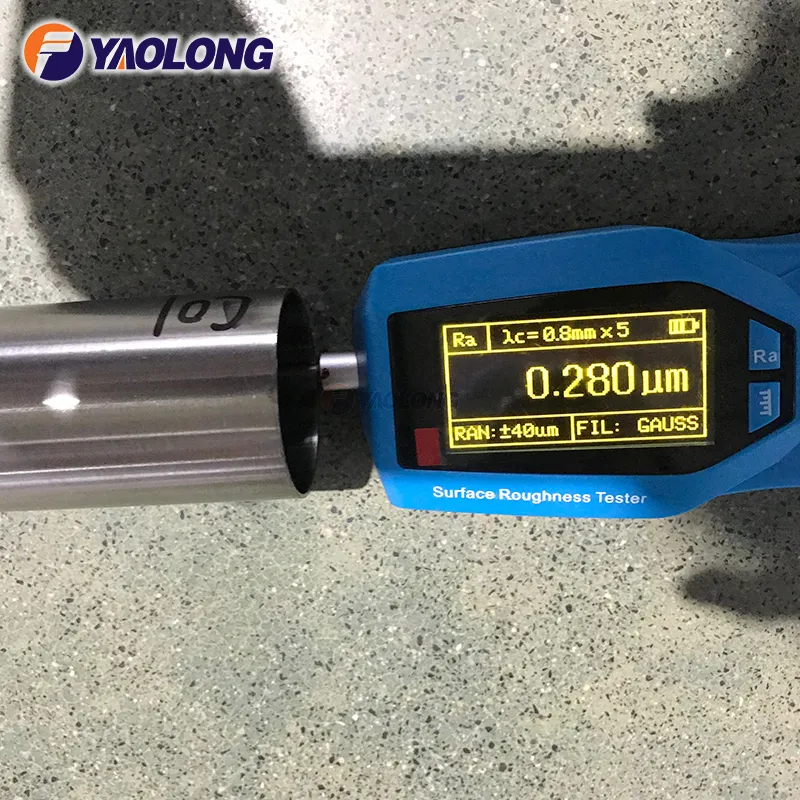
The standard mandates that the interior surface must be smooth, non-toxic, non-absorbent, and corrosion-resistant. This is primarily achieved through a mechanical polishing and electropolishing process. The result is an ultra-smooth finish that minimizes the ability for microbes and product particles to adhere, and it allows for effective cleaning and sterilization.
The most common and accepted finish is defined by a maximum Ra (Roughness Average) value. A typical Ra specification for ASTM A270 tubing is ≤ 0.38 µm (15 microinches) or better, often referred to as a “sanitary finish” or “micro-finish.” Some applications, like high-purity pharmaceutical or biotech processes, may require an even smoother finish of ≤ 0.25 µm (10 microinches).
This smooth surface is created by first mechanically abrading the tube with progressively finer abrasives to remove imperfections and weld beads. This is often followed by electropolishing, an electrochemical process that removes a thin layer of surface material. Electropolishing further smooths the surface, removes embedded contaminants, and enhances the natural passive oxide layer, which significantly improves corrosion resistance.
The primary purpose of this meticulously controlled surface is to prevent contamination, facilitate easy and effective cleaning-in-place (CIP) and sterilization-in-place (SIP) procedures, and provide superior corrosion resistance against aggressive cleaning chemicals and process fluids.

Mirror Polished Surface
| Process | RA Micro Inch | RA Micron | ISO Designation |
|---|---|---|---|
| 150 grit | 30-35 | 0.75-0.875 | N6 |
| 150 grit + Electropolish | 12-20 | 0.3-.05 | |
| 180 grit | 20-25 | 0.5-.0625 | |
| 180 grit + Electropolish | 10-16 | 0.25-0.4 | |
| 240 grit | 15-20 | 0.375-0.5 | N5 |
| 240 grit + Electropolish | 8-12 | 0.2-0.3 | |
| 320 grit | 8-12 | 0.2-0.3 | N4 |
| 320 grit + Electropolish | 6-12 | 0.15-0.3 |
Chemical Composition of Stainless Steel Tube
| TUBE GRADES | UNS | Cr | Ni | Mo | C | P | S | Mn | Si |
| TP304 | S30400 | 18.0-20.0 | 8.0-11.0 | – | 0.08 | 0.045 | 0.03 | 2 | 1 |
| TP304L | S30403 | 18.0-20.0 | 8.0-13.0 | – | 0.035 | 0.045 | 0.03 | 2 | 1 |
| TP316 | S3160 | 16.0-18.0 | 11.0-14.0 | 2.0-3.0 | 0.08 | 0.045 | 0.03 | 2 | 1 |
| TP316L | S31603 | 16.0-18.0 | 10.0-14.0 | 2.0-3.0 | 0.035 | 0.045 | 0.03 | 2 | 1 |
Tensile Properties of Stainless Steel Tube
| Material | Heat Treatment | Yield Strength Ksi (MPa), Min. | Tensile Strength Ksi (MPa), Min. | Temperure Min. ℉(℃) | Elongation %, Min |
| ASME SA270 304 | Solution | 30(205) | 75(515) | 1900 (1040) | 35 |
| ASME SA270 304L | Solution | 25(170) | 70(485) | 1900 (1040) | 35 |
| ASME SA270 316 | Solution | 30(205) | 75(515) | 1900(1040) | 35 |
| ASME SA270 316L | Solution | 25(170) | 70(485) | 1900(1040) | 35 |
Stainless Steel Hygienic Tube Stainless Steel Hygienic Tube Stainless Steel Hygienic Tube Stainless Steel Hygienic Tube Stainless Steel Hygienic Tube Stainless Steel Hygienic Tube Stainless Steel Hygienic Tube
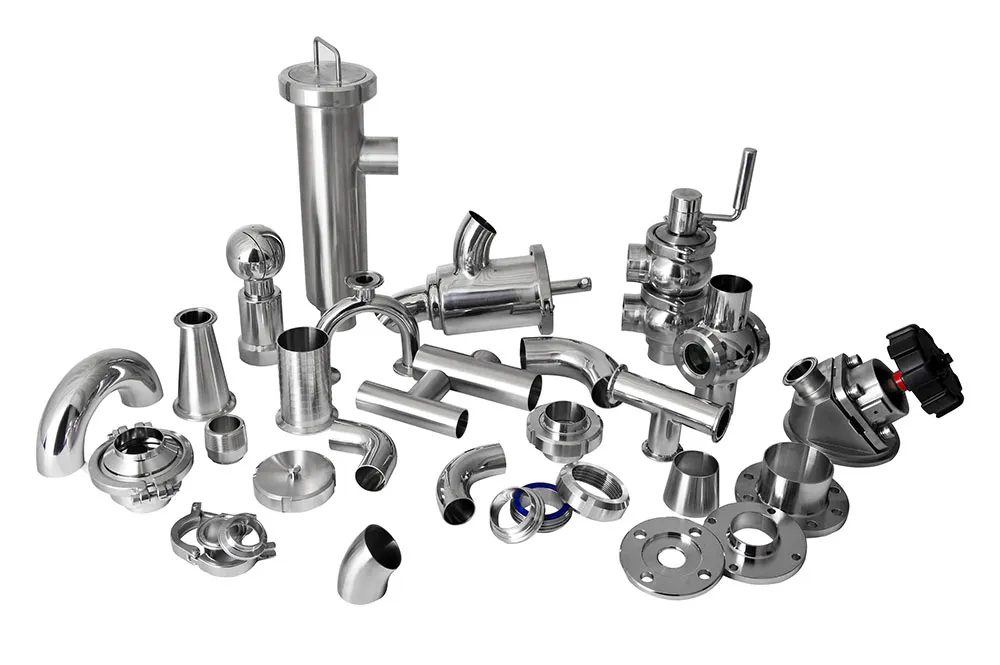
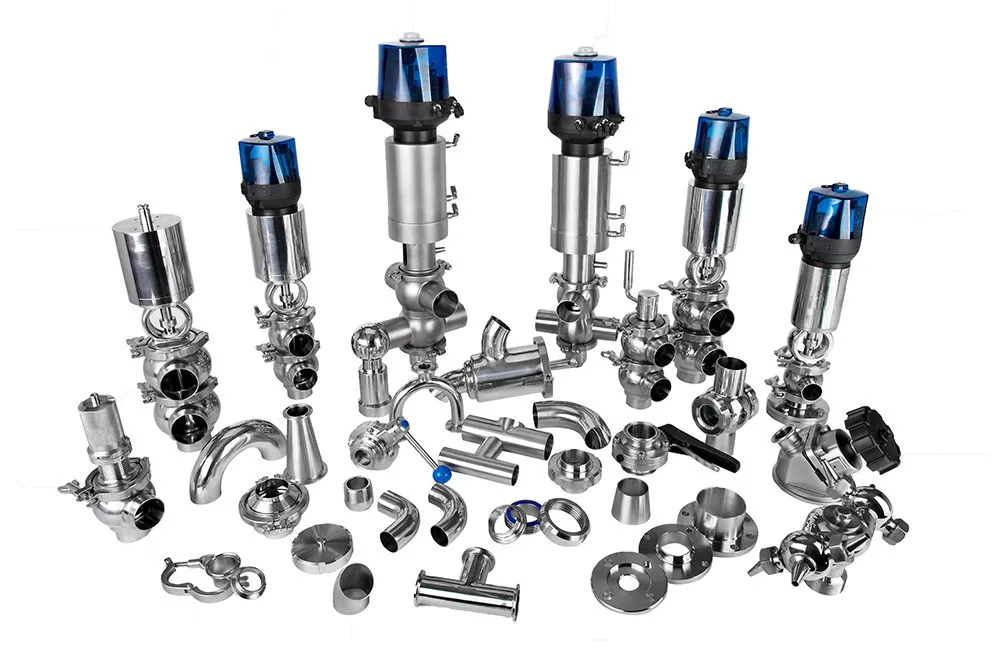
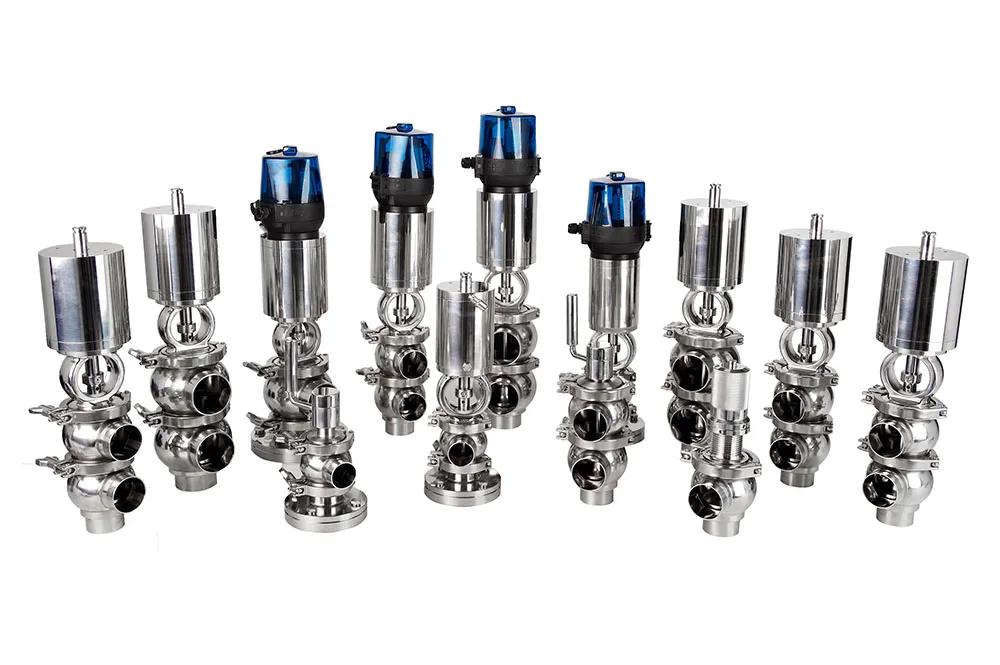
Sanitary Fittings in Process Piping (Food, Pharma, Dairy, etc.)
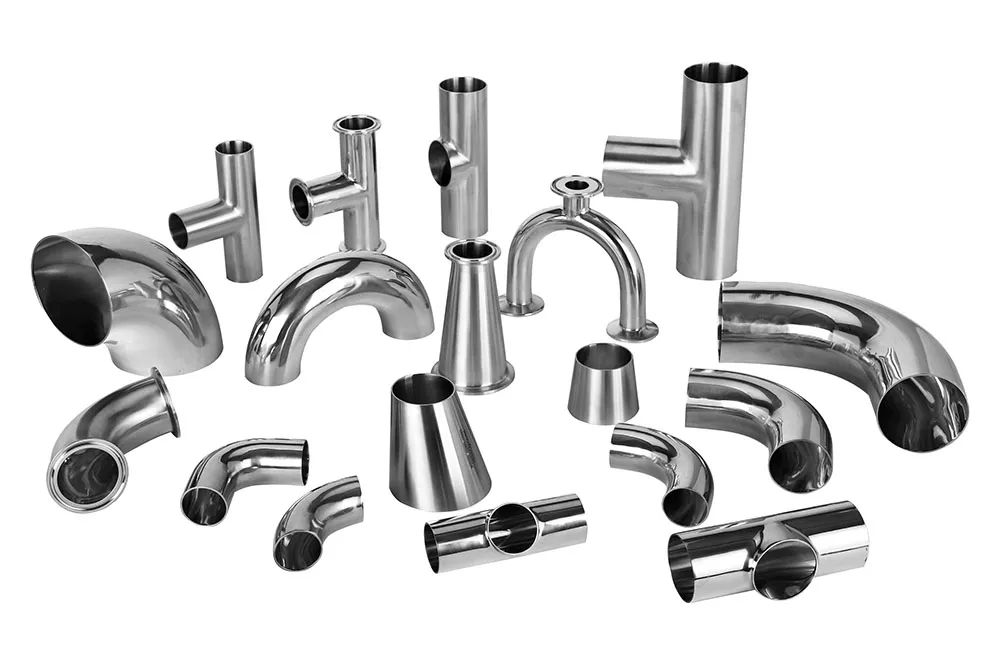
In industrial contexts, Sanitary Fittings (or Hygienic Fittings) refer to the specialized components used to connect pipes in systems where purity and cleanliness are critical. They are designed to prevent bacterial growth, allow for complete cleaning, and ensure product integrity.
Key Idea: These are the connectors and pipes themselves, used to build a system for processing sensitive products.
Key Characteristics:
Smooth, Polished Surfaces: Internally, they have a very smooth finish (often measured in Ra micro-inches) to prevent bacteria from clinging and to allow for easy cleaning.
No Crevices or Dead Spaces: They are designed to be flush with the pipe, creating a seamless flow path so that product or cleaning fluids don’t get trapped.
Easy to Disassemble and Clean (CIP/SIP): They are designed for frequent cleaning, often using methods like Clean-in-Place (CIP) or Sterilize-in-Place (SIP).
Material: Almost exclusively made from 304 or 316L Stainless Steel for its corrosion resistance and non-reactivity.
Common Types of Sanitary Fittings:
Clamp Fittings (Tri-Clamp): The most common type, using a three-piece clamp to seal a gasket between two ferrules.
Butt Weld Fittings: Permanently welded to create a perfectly smooth, crevice-free joint. Used where disassembly isn’t needed.
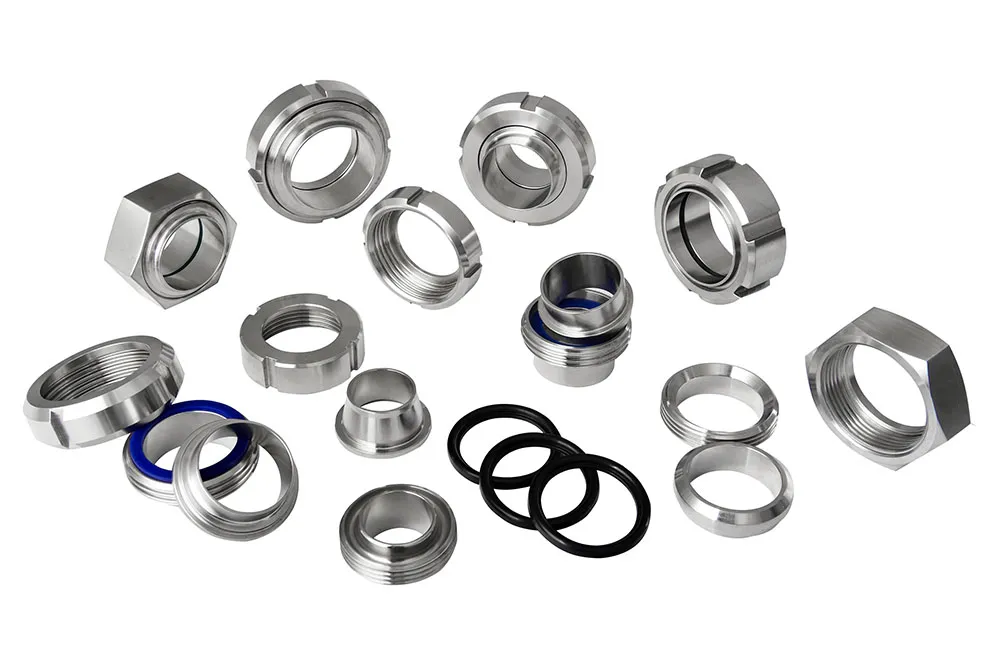
Bevel Seat Fittings: An older style, similar to clamp fittings but with a different gasket and connection system.
DIN/SMS Fittings: Standards more common in Europe, using a threaded nut to compress a gasket.
Common Components:
Elbows (90°, 45°)
Tees
Reducers
Caps
Ferrule (the stub end that gets connected)