

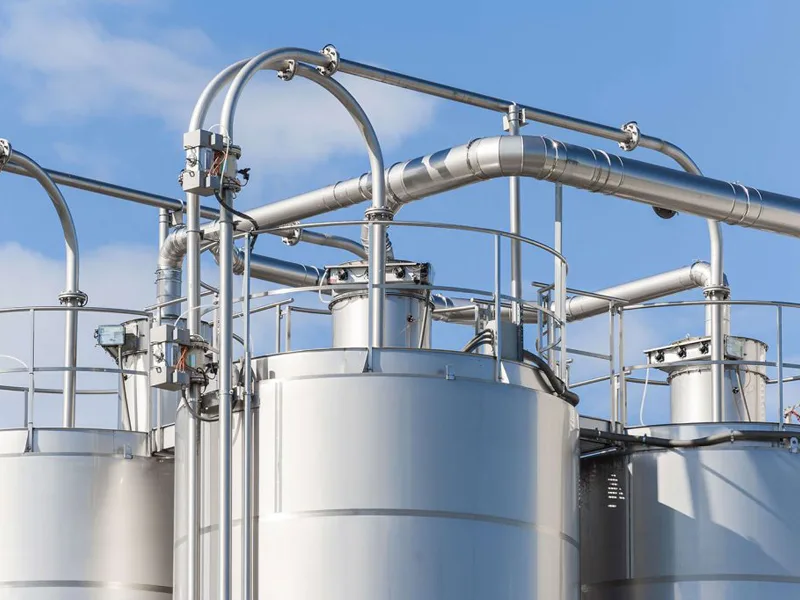
Selecting stainless steel pipe for chemical processing starts with the process conditions, not with a generic alloy recommendation. The fluid composition and concentration, contaminants, temperature, pressure, flow velocity, cleaning chemicals, fabrication method, and shutdown conditions can all affect corrosion and service performance.
Common Chemical-Processing Applications
- Process and transfer piping for compatible acids, alkalis, solvents, intermediates, and utility fluids.
- Feed, return, drain, and sampling lines around reactors and storage systems.
- Heat-exchanger, condenser, and temperature-control circuits.
- Water-treatment, recovery, and compatible effluent-handling systems.
- Instrumentation connections and fabricated process-piping assemblies.
Grade Selection Factors
| Selection factor | Why it matters | Information to provide |
|---|---|---|
| Process chemistry | Corrosion behavior changes with composition, concentration, and contaminants. | Fluid name, concentration, impurities, and phase. |
| Temperature and pressure | Operating and design limits affect alloy choice, wall thickness, and code requirements. | Normal, design, startup, and cleaning conditions. |
| Fabrication | Welding, forming, and heat input can influence corrosion performance. | Seamless or welded pipe, joining method, and heat-treatment requirements. |
| Surface and cleanliness | Surface condition may affect cleaning, contamination control, and corrosion initiation. | Finish, pickling/passivation, cleaning, and packaging requirements. |
| Inspection | Testing must match the product standard and critical service requirements. | NDT method, pressure test, witness points, and documentation. |
Grades such as 304L and 316L are used in many process environments, but no stainless steel grade is universally resistant to every chemical. Duplex or other alloy families may be considered for specific combinations of chloride exposure, strength, temperature, and fabrication requirements. Final material selection should be confirmed by the project engineer using service data and the applicable design code.
Standards, Dimensions, and Documentation
Specify the product standard, grade, NPS or outside diameter, schedule or wall thickness, seamless or welded construction, length, end preparation, surface condition, heat treatment, testing, inspection, and documentation. For pressure piping, the governing design code and the product specification perform different roles and should both be identified.
Explore the ASTM A312 stainless steel pipe specification page, compare TP304L and TP316L, or view the full industrial pipe range.
Inspection and Quality Planning
The inspection plan may include material traceability, dimensional checks, visual examination, pressure testing, and specified NDT. The exact combination depends on the product standard, construction method, service category, and purchase order. Learn more about hydrostatic testing and the available quality testing information.
Chemical-Processing Pipe FAQ
Is 316L always better than 304L for chemical service?
No. Performance depends on the complete environment and fabrication condition. 316L may improve resistance in some services, but it is not suitable for every chemical or chloride condition.
What details are needed for a technical quotation?
Provide the process medium, design temperature and pressure, product standard, grade, dimensions, construction type, quantity, testing, surface condition, and required material documentation.
Can a supplier select the final alloy from the fluid name alone?
No. Concentration, temperature, contaminants, aeration, flow, shutdown conditions, and fabrication details may change the result. Final selection belongs in the project engineering review.
Request a quote: send your pipe schedule, material requirement, quantities, testing, and documentation needs through the website inquiry form for a specification-based review.